

Dedicated to excellence in thoracic surgery
The Baylor Scott & White Center for Thoracic Surgery focuses exclusively on the treatment of non-cardiac chest disease.
Our expert team has pioneered minimally invasive VATS (video-assisted thoracoscopic surgery) approaches to lung cancer treatment, as well as robotic surgery for the treatment of many thoracic diseases. Additionally, the center has expertise in minimally invasive treatment of emphysema. The team works closely with the Charles A. Sammons Cancer Center at Dallas to provide access to the latest research and clinical trials.
We work closely with our partners at Baylor Scott & White Center for Esophageal Diseases to bring you comprehensive care and allows for prompt referrals between the two service lines.
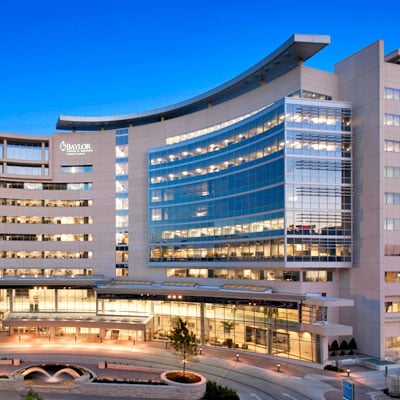
3410 Worth St Ste 760, Dallas, TX, 75246
3410 Worth St Ste 760, Dallas, TX, 75246
Not accepting walk-ins
Patients in line:

3800 Gaylord Pkwy Ste 910, Frisco, TX, 75034
3800 Gaylord Pkwy Ste 910, Frisco, TX, 75034
Not accepting walk-ins
Patients in line:

3711 22nd St Ste B, Lubbock, TX, 79410
3711 22nd St Ste B, Lubbock, TX, 79410
Not accepting walk-ins
Patients in line:

6701 Heritage Pkwy Ste 130, Rockwall, TX, 75087
6701 Heritage Pkwy Ste 130, Rockwall, TX, 75087
Not accepting walk-ins
Patients in line:

1321 S Beckham Ave , Tyler, TX, 75702
1321 S Beckham Ave , Tyler, TX, 75702
Not accepting walk-ins
Patients in line:

2480 N Interstate 35E , Waxahachie, TX, 75165
2480 N Interstate 35E , Waxahachie, TX, 75165
Not accepting walk-ins
Patients in line:
Insurances accepted
Baylor Scott & White has established agreements with several types of insurance to ensure your health needs are covered.
Loading...
LoadingMedical services
Baylor Scott & White Center for Thoracic Surgery focuses exclusively on the treatment of non-cardiac chest disease.
EVT for severe emphysema
Emphysema is a severe form of chronic obstructive pulmonary disease, or COPD.
Emphysema is progressive, meaning it worsens over time, and it can have a significant impact on your quality of life.
When medical management, oxygen therapy, and pulmonary rehabilitation no longer provide sufficient relief, surgery and lung transplantation have been the only alternatives, until now.
Endobronchial valve therapy (EVT) is a new, minimally-invasive treatment option for severe emphysema patients. For appropriate patients, EVT has been shown in clinical trials to provide improvements in lung function, shortness of breath, and overall quality of life.
How it works
The valve is a small, umbrella-shaped, one-way valve that is placed inside the airways of the diseased lung. The valve system redirects the air you breathe away from the areas most affected by your emphysema and toward the healthier areas of your lungs allowing you to breathe more easily.
Appropriate candidates
EVT may be suitable if you have COPD with severe emphysema and your symptoms are no longer improved with medication, pulmonary rehabilitation and oxygen therapy. We perform preliminary tests, such as pulmonary function tests and a CT scan, to see if you may benefit from valve therapy.
EVT is usually not appropriate if you have had prior lung surgery, pleural diseases, cancer, or severe heart disease.
What to expect
If it is determined you are a candidate, on the day of the procedure, you can expect the following:
- You will be given medication that will make you unaware. The best type of sedation or anesthesia for you will be discussed prior to the procedure.
- Using a bronchoscope (a thin tube with a camera, inserted through your mouth or nose), the doctor will place the valves in your airways.
- You may be required to stay in the hospital for a minimum of one night after the procedure.
- You will be given instructions for your care at home, including which medicines you should take and any follow-up visits.
Although you may feel much better after the procedure, it’s important to allow your lungs to adjust to the therapy. Plan to rest and limit your activities for at least one week following the procedure.
Pay bill
Baylor Scott & White Health is pleased to offer you multiple options to pay your bill. View our guide to understand your Baylor Scott & White billing statement.
We offer two online payment options:
- Make a one-time payment without registering by selecting the "Pay a Bill as a Guest" option.
- Enroll or login to your MyBSWHealth account to view account balances and statements, set up a payment plan or enroll in paperless statements.
Other Payment options:
Financial assistance
At Baylor Scott & White Health, we want to be a resource for you and your family. Our team of customer service representatives and financial counselors are here to help you find financial solutions that can help cover your cost of care. We encourage you to speak to a team member before, during or after care is received.
Patient forms
To ensure that your visit to our office is as convenient and efficient as possible, we are pleased to offer our registration forms online. The patient registration form may be completed electronically and printed for better legibility or completed manually.
Lung screening nodule clinic
You can be screened for lung cancer before symptoms start
You can be screened for lung cancer before symptoms start
Patient education
Learn more about the thoracic conditions we treat and procedures performed at the Baylor Scott & White Center for Thoracic Surgery.
Achalasia
The Center for Thoracic Surgery and The Center for Esophageal Diseases work together to diagnose and treat Achalasia.
We have a multidisciplinary group composed of gastroenterologists and surgeons who work hand-in-hand to offer all aspects of care for patients.
We evaluate more than 400 patients with this rare condition every year and perform more than 100 surgical procedures yearly, including Dilations, Heller Myotomy and POEM, which we tailor and individualize to each patient's needs.
Diagnostic studies include:
Barium esophagram
A contrast radiologic swallowing study performed on an outpatient basis. A patient swallows barium while sequential images are taken of the esophagus. Classic radiologic findings in a patient with achalasia include dilatation of the esophagus and narrowing of the gastroesophageal junction, which causes a "bird beak" appearance on an X-ray. Other findings include esophageal aperistalsis and poor emptying of contrast from the esophagus. The esophagram helps establish the diagnosis of achalasia and determine the stage of achalasia (early or late) judged by the dilatation and deformity (tortuosity) of the esophagus. Both these findings have implications on treatment and prognosis.
Upper endoscopy
A small camera (endoscope) is inserted through the mouth and used to examine the esophagus and stomach. Upper endoscopies are performed on an outpatient basis and under sedation. In evaluating patients with possible achalasia, an upper endoscopy rules out tumors or scarring (strictures) as causes of dysphagia, which may mimic achalasia symptoms (pseudoachalasia).
Esophageal manometry
A small tube (catheter) with pressure transducers along its length is briefly inserted through the nose or mouth, through the esophagus, and into the stomach. Esophageal manometry is performed on an outpatient basis. The patient is asked to swallow while pressure readings are performed, and then the catheter is removed. These readings determine the esophagus's peristalsis and relaxation of the lower esophageal sphincter. Manometric findings of aperistalsis and incomplete lower esophageal sphincter relaxation solidify achalasia's diagnosis.
EndoFLIP®
EndoFLIP® (endolumenal functional lumen imaging probe) is a newer, minimally invasive device created to complement traditional diagnostic tests. EndoFLIP uses a balloon mounted on a thin catheter placed transorally at the time of a sedated endoscopy. In comparison to traditional diagnostic tests, EndoFLIP offers the additional capability of measuring the cross-sectional area and intraluminal pressure of the esophagus while under distension (as if a solid bolus was present). The technology uses impedance planimetry to estimate cross-sectional area.
Videos
In the media
- Dallas surgeons save woman's life after COVID-19 causes heart failure
- The Bonnie J. Addaio Lung Cancer Foundation - Lung Cancer Living Room
- When a lung patient climbs mountains! (The New York Times subscription required)
- Patient voices: Lung cancer (The New York Times subscription required)
- E-cigarettes’ risks and benefits: Highlights from the report to the FDA (The New York Times subscription required)
- Vaping can be addictive and may lure teenagers to smoking, science panel concludes (The New York Times subscription required)