

What is kyphosis?
Kyphosis is a condition where the upper back curves forward more than normal, creating a rounded or hunched appearance. It's sometimes called a "hunchback" or "roundback," and it can affect people of all ages, from children to older adults.
A normal spine has gentle curves that help with balance and movement. But when the upper curve becomes too steep—usually more than 50 degrees—it’s considered kyphosis. For some, the curve is mild and doesn’t cause any problems. For others, it can lead to back pain, stiffness or a noticeable change in posture.
Kyphosis can happen for different reasons. It may be caused by poor posture, injuries, weakened bones from osteoporosis or certain medical conditions. In kids and teens, it can also be related to a growth issue called Scheuermann’s disease.
Treatment depends on what’s causing the curve and how severe it is. Some people may just need physical therapy or exercises to improve posture. Others might need a back brace or surgery.
Types of kyphosis
There are different types of kyphosis, and each one has its own cause and treatment. Some types are more common in children and teenagers, while others usually appear later in life. Knowing which type you have can help guide the right care.
Postural kyphosis
This is the most common type and is usually caused by poor posture or slouching. It often shows up during the teenage years and is more common in girls than boys. The spine itself is still normal, and the curve usually improves with better posture, stretching and strengthening exercises.
Scheuermann’s kyphosis
This type happens when the bones in the spine grow unevenly during childhood. The front of the bones become wedge-shaped, which causes a more noticeable curve. It’s a structural issue and tends to be more rigid than postural kyphosis. It often shows up in teens and may need physical therapy, a back brace or sometimes surgery.
Congenital kyphosis
This type is present at birth. It happens when the bones in a baby’s spine don’t form the right way or are fused together. Congenital kyphosis can get worse as the child grows and usually needs to be watched closely by a specialist. In some cases, surgery may be needed early on.
Cervical kyphosis
This type affects the neck. Instead of curving slightly backward like it should, the neck curves forward or becomes too straight. This can cause a stiff, upright posture, sometimes called “military neck.” It may lead to neck pain, limited movement or nerve problems in more serious cases.
Hyperkyphosis
Hyperkyphosis means the curve in the spine is more severe than normal. It usually shows up in adults over 40 and is often linked to osteoporosis or spine fractures. As bones weaken or collapse, the curve can become more noticeable and may cause back pain, stiffness or trouble standing up straight.
Kyphosis symptoms
Kyphosis symptoms can range from mild to more serious, depending on how much the spine is curved and what causes it. Some people may not notice any symptoms at first, especially if the curve develops slowly over time.
Common signs of kyphosis include:
- A rounded or hunched upper back
- Head that leans forward or sits lower than the shoulders
- Back pain or stiffness, especially in the upper or mid-back
- Fatigue after standing or sitting for long periods
- Tightness in the back or hamstrings
- In more severe cases, trouble breathing or nerve problems

When to see a doctor
You should see your doctor if noticeable changes in your or your child’s spine concern you. Sometimes, children and teenagers are referred to a doctor for kyphosis after a scoliosis screening at school. The sooner you or your child gets a diagnosis, the earlier you can start treatment.
Kyphosis causes
Kyphosis can have different causes depending on your age, overall health and how the spine is affected. Some cases are related to posture, while others are caused by changes in the bones of the spine.
Common causes include:
- Poor posture: Slouching over time, especially in teens, can lead to postural kyphosis.
- Spinal development issues: Conditions like Scheuermann’s disease cause the bones in the spine to grow unevenly, leading to a curved back.
- Congenital defects: Some babies are born with spine bones that didn’t form properly, which can cause kyphosis as they grow.
- Osteoporosis: This bone-thinning condition can lead to weak or fractured vertebrae, especially in older adults.
- Spinal injuries: Trauma or fractures in the spine can lead to a more severe forward curve.
- Degenerative diseases: Conditions like arthritis can break down the spine over time and lead to kyphosis.
Kyphosis risk factors
Your risk of getting kyphosis depends on your age and family history. Hyperkyphosis becomes more likely as you get older, while postural and Scheuermann’s kyphosis are more common in teenagers. Congenital kyphosis develops before birth.
Scheuermann’s and congenital kyphosis are structural problems without a clear cause. However, you’re more likely to get postural or hyperkyphosis if you have any of the following:
- Connective tissue disorders: Ehlers-Danlos syndrome and similar disorders affect the connective tissue supporting your bones.
- Family history: Studies suggest some forms of kyphosis are partly caused by your genes.
- Poor posture: Slouching can stretch the muscles and ligaments of the spine in children and adults. Physical inactivity and sitting for long periods can worsen your posture.
- Sex: Females are more likely to have postural kyphosis, while Scheuermann’s kyphosis affects twice as many boys as girls.
Complications
If kyphosis becomes more severe or isn’t treated, it can lead to other health problems over time. Possible complications include:
- Chronic back pain: A more pronounced curve can lead to long-term pain or discomfort
- Breathing problems: In severe cases, the curve can press on the lungs and make it harder to breathe
- Limited movement: Stiffness in the spine can affect posture, flexibility and daily activities
- Nerve issues: In rare cases, the curve can pinch nerves, causing numbness or weakness in the arms or legs
- Changes in appearance: A noticeable hunch or rounded back may affect confidence and self-esteem
Most people with kyphosis don’t develop serious complications, especially with early care. If you notice changes in posture, pain or other symptoms, talk with your doctor to help prevent long-term problems.
How is kyphosis diagnosed
If you or your child shows signs of kyphosis, your doctor will start with a thorough evaluation to understand the cause and severity of the curve. Diagnosing kyphosis involves several steps, including a medical history, physical exam and imaging tests. This helps your healthcare provider choose the best treatment plan for you.
Medical history and exam
During your initial visit, your doctor will perform a physical exam and want to know if you’re having symptoms, such as back pain, fatigue, chest pain or neurological problems related to a curve. If you have pain, they may want to know if it gets worse when you move.
For the physical exam, your doctor will look for an abnormal curve of your spine. They might press your spine to see if surrounding muscles feel sore or tender. They may also ask you to bend forward or lie down. In postural kyphosis, the curve often disappears when you lie down.
They might also look for any changes in your nervous system and test your reflexes.
Kyphosis treatment
Treatment for kyphosis depends on the type, cause and how severe the curve is. Many people with mild kyphosis manage their symptoms well with simple steps like exercise and posture correction. For more serious cases, additional treatments may be needed to reduce pain, improve posture and prevent the curve from getting worse.
Medication
Medicine can help relieve symptoms of kyphosis, especially if you're dealing with discomfort, inflammation or an underlying condition like osteoporosis. Treatment often includes one or both of the following:
- Pain medication: Over-the-counter pain relievers like ibuprofen or naproxen are commonly used to reduce pain and inflammation. Acetaminophen may also help if inflammation isn’t a major issue. For more severe or ongoing pain, your doctor may prescribe stronger medications for short-term use to help you stay comfortable and active.
- Medications for underlying conditions: If your kyphosis is caused or worsened by another health issue—like osteoporosis or arthritis—your doctor may recommend medications to treat that condition. For example, osteoporosis medications can help strengthen bones and reduce the risk of spine fractures. In some cases, anti-inflammatory or infection-fighting medications may also be needed.
Find care for kyphosis
At Baylor Scott & White, we have multiple locations across North and Central Texas to provide you with access to expert care. Our specialized centers include neurology and back and neck care, all designed to meet the unique needs of people who have been diagnosed with kyphosis. Whether you're seeking diagnostic testing, treatment options or ongoing support, our teams are here to help you.

4708 Alliance Blvd Pavilion I, Ste 810, Plano, TX, 75093
4708 Alliance Blvd Pavilion I, Ste 810, Plano, TX, 75093
Not accepting walk-ins
Patients in line:

1400 8th Ave , Fort Worth, TX, 76104
1400 8th Ave , Fort Worth, TX, 76104
Accepting walk-ins
Patients in line:

300A University Blvd , Round Rock, TX, 78665
300A University Blvd , Round Rock, TX, 78665
Not accepting walk-ins
Patients in line:
5245 W US Hwy 290 Service Rd , Austin, TX, 78735
5245 W US Hwy 290 Service Rd , Austin, TX, 78735
Accepting walk-ins
Patients in line:
5330 Overpass Rd , Buda, TX, 78610
5330 Overpass Rd , Buda, TX, 78610
Accepting walk-ins
Patients in line:
12505 Lebanon Rd , Frisco, TX, 75035
12505 Lebanon Rd , Frisco, TX, 75035
Accepting walk-ins
Patients in line:

700 Scott and White Dr , College Station, TX, 77845
700 Scott and White Dr , College Station, TX, 77845
Accepting walk-ins
Patients in line:
5601 Warren Pkwy , Frisco, TX, 75034
5601 Warren Pkwy , Frisco, TX, 75034
Accepting walk-ins
Patients in line:
1650 W College St , Grapevine, TX, 76051
1650 W College St , Grapevine, TX, 76051
Accepting walk-ins
Patients in line:
100 Hillcrest Medical Blvd , Waco, TX, 76712
100 Hillcrest Medical Blvd , Waco, TX, 76712
Accepting walk-ins
Patients in line:
1901 N MacArthur Blvd , Irving, TX, 75061
1901 N MacArthur Blvd , Irving, TX, 75061
Accepting walk-ins
Patients in line:
100 Medical Pkwy , Lakeway, TX, 78738
100 Medical Pkwy , Lakeway, TX, 78738
Accepting walk-ins
Patients in line:
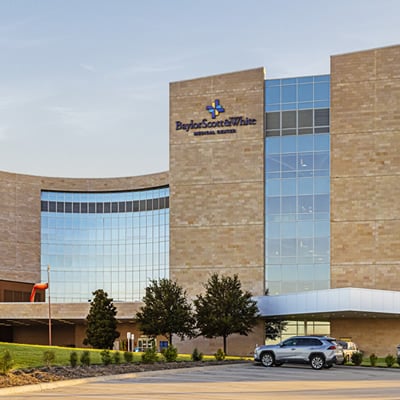
5252 W University Dr Highway 380 at Lake Forest Drive, McKinney, TX, 75071
5252 W University Dr Highway 380 at Lake Forest Drive, McKinney, TX, 75071
Accepting walk-ins
Patients in line:
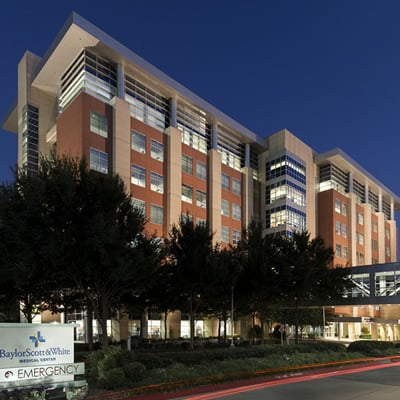
4700 Alliance Blvd , Plano, TX, 75093
4700 Alliance Blvd , Plano, TX, 75093
Accepting walk-ins
Patients in line:

300 University Blvd , Round Rock, TX, 78665
300 University Blvd , Round Rock, TX, 78665
Accepting walk-ins
Patients in line:
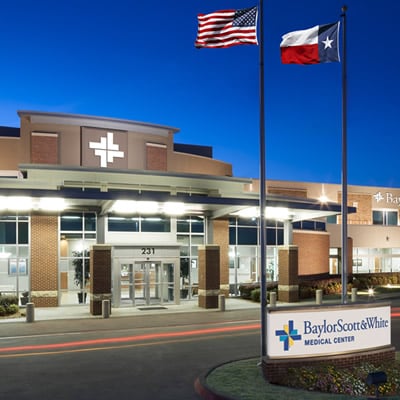
231 S Collins Rd , Sunnyvale, TX, 75182
231 S Collins Rd , Sunnyvale, TX, 75182
Accepting walk-ins
Patients in line:
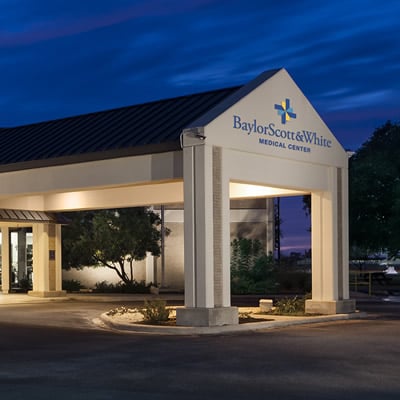
305 Mallard Ln , Taylor, TX, 76574
305 Mallard Ln , Taylor, TX, 76574
Accepting walk-ins
Patients in line:
2401 S 31st St , Temple, TX, 76508
2401 S 31st St , Temple, TX, 76508
Accepting walk-ins
Patients in line:

2850 E State Highway 114 , Trophy Club, TX, 76262
2850 E State Highway 114 , Trophy Club, TX, 76262
Accepting walk-ins
Patients in line:

2727 E Lemmon Ave , Dallas, TX, 75204
2727 E Lemmon Ave , Dallas, TX, 75204
Accepting walk-ins
Patients in line:
2400 N Interstate 35E , Waxahachie, TX, 75165
2400 N Interstate 35E , Waxahachie, TX, 75165
Accepting walk-ins
Patients in line:

3409 Worth St Ste 300, Dallas, TX, 75246
3409 Worth St Ste 300, Dallas, TX, 75246
Not accepting walk-ins
Patients in line:

1631 Lancaster Dr Ste 230, Grapevine, TX, 76051
1631 Lancaster Dr Ste 230, Grapevine, TX, 76051
Not accepting walk-ins
Patients in line:
5220 W University Dr POB II, Ste 220, McKinney, TX, 75071
5220 W University Dr POB II, Ste 220, McKinney, TX, 75071
Not accepting walk-ins
Patients in line:

707 Highlander Blvd , Arlington, TX, 76015
707 Highlander Blvd , Arlington, TX, 76015
Accepting walk-ins
Patients in line:
3900 Junius St Ste 500, Dallas, TX, 75246
3900 Junius St Ste 500, Dallas, TX, 75246
Not accepting walk-ins
Patients in line:

4401 Coit Rd Ste 203, Frisco, TX, 75035
4401 Coit Rd Ste 203, Frisco, TX, 75035
Not accepting walk-ins
Patients in line:

1631 Lancaster Dr Ste 230, Grapevine, TX, 76051
1631 Lancaster Dr Ste 230, Grapevine, TX, 76051
Not accepting walk-ins
Patients in line:
5220 W University Dr POB II, Ste 300, McKinney, TX, 75071
5220 W University Dr POB II, Ste 300, McKinney, TX, 75071
Accepting walk-ins
Patients in line:

7217 Telecom Pkwy Ste 325, Garland, TX, 75044
7217 Telecom Pkwy Ste 325, Garland, TX, 75044
Not accepting walk-ins
Patients in line:
9101 N Central Expy Ste 370, Dallas, TX, 75231
9101 N Central Expy Ste 370, Dallas, TX, 75231
Not accepting walk-ins
Patients in line:
4716 Alliance Blvd Pavilion II, Ste 600, Plano, TX, 75093
4716 Alliance Blvd Pavilion II, Ste 600, Plano, TX, 75093
Not accepting walk-ins
Patients in line:
341 Wheatfield Dr Ste 290, Sunnyvale, TX, 75182
341 Wheatfield Dr Ste 290, Sunnyvale, TX, 75182
Not accepting walk-ins
Patients in line:

3800 Gaylord Pkwy Ste 810, Frisco, TX, 75034
3800 Gaylord Pkwy Ste 810, Frisco, TX, 75034
Not accepting walk-ins
Patients in line:

140 Hillcrest Medical Blvd 2nd Floor, Waco, TX, 76712
140 Hillcrest Medical Blvd 2nd Floor, Waco, TX, 76712
Not accepting walk-ins
Patients in line:

2405 S Clear Creek Rd , Killeen, TX, 76549
2405 S Clear Creek Rd , Killeen, TX, 76549
Not accepting walk-ins
Patients in line:
3900 Junius St Ste 705, Dallas, TX, 75246
3900 Junius St Ste 705, Dallas, TX, 75246
Not accepting walk-ins
Patients in line:

4401 Coit Rd Ste 203, Frisco, TX, 75035
4401 Coit Rd Ste 203, Frisco, TX, 75035
Not accepting walk-ins
Patients in line:

16050 Everwell Ln Professional Pavilion I, Ste 310, Frisco, TX, 75033
16050 Everwell Ln Professional Pavilion I, Ste 310, Frisco, TX, 75033
Not accepting walk-ins
Patients in line:

4400 Interstate 30 W Ste 300, Greenville, TX, 75402
4400 Interstate 30 W Ste 300, Greenville, TX, 75402
Not accepting walk-ins
Patients in line:
3800 Gaylord Pkwy Ste 830, Frisco, TX, 75034
3800 Gaylord Pkwy Ste 830, Frisco, TX, 75034
Not accepting walk-ins
Patients in line:

140 Hillcrest Medical Blvd , Waco, TX, 76712
140 Hillcrest Medical Blvd , Waco, TX, 76712
Not accepting walk-ins
Patients in line:

1776 N US 287 Ste 220, Mansfield, TX, 76063
1776 N US 287 Ste 220, Mansfield, TX, 76063
Not accepting walk-ins
Patients in line:

4431 E US Hwy 287 , Midlothian, TX, 76065
4431 E US Hwy 287 , Midlothian, TX, 76065
Not accepting walk-ins
Patients in line:

301 E Ovilla Rd Ste 100, Red Oak, TX, 75154
301 E Ovilla Rd Ste 100, Red Oak, TX, 75154
Not accepting walk-ins
Patients in line:

2360 N Interstate 35E Ste 320, Waxahachie, TX, 75165
2360 N Interstate 35E Ste 320, Waxahachie, TX, 75165
Not accepting walk-ins
Patients in line:

1800 Park Place Ave , Fort Worth, TX, 76110
1800 Park Place Ave , Fort Worth, TX, 76110
Accepting walk-ins
Patients in line:
3601 N Calais St , Sherman, TX, 75090
3601 N Calais St , Sherman, TX, 75090
Accepting walk-ins
Patients in line:

4780 N Josey Ln , Carrollton, TX, 75010
4780 N Josey Ln , Carrollton, TX, 75010
Not accepting walk-ins
Patients in line:
1717 Paluxy Rd , Granbury, TX, 76048
1717 Paluxy Rd , Granbury, TX, 76048
Not accepting walk-ins
Patients in line:
Frequently asked questions
Loading...