What is a breast biopsy?
A breast biopsy is a test that takes a small tissue sample from a specific breast area. This tissue sample is then sent to the lab, where it’s examined closely under a microscope to help diagnose breast conditions.
Your doctor may order a breast biopsy after an imaging test, like a mammogram, shows an area that needs more testing. While imaging tests can’t diagnose breast cancer, a breast biopsy can give you the answers you need when you have a lump or spot in your breast. If you need a breast biopsy, the good news is that about 8 out of 10 breast biopsies come back benign—or show no signs of cancer.
Types of breast biopsies
There are several different kinds of breast biopsy procedures that your care team may recommend to check on your breast health. Some use a needle to take a tissue sample, while others use surgery. Many breast biopsies use imaging technology, like X-rays, ultrasound, or MRI, to provide images of your breast tissue and ensure the biopsy is taken from a precise location in the breast.
The type of breast biopsy that’s right for you depends on your unique health and the area of concern in your breast. Your team will use factors like the size, location and shape of the spot or lump to help decide which test is recommended.
Fine needle aspiration (FNA) biopsy
Fine needle aspiration uses a small needle to remove fluid or cells from a lump in your breast. This type of biopsy is often used when your care team suspects a lump is a breast cyst. Removing the fluid in this procedure sometimes helps a breast cyst go away.
Breast biopsy procedure
When you need a breast biopsy procedure, our team is here to make you as comfortable as possible and walk you through each step. Your preparation, procedure and recovery steps will be based on the type of biopsy you have. Generally, the process should take between 20 minutes to about an hour.
Usually, a needle biopsy is less invasive and only requires local numbing on your breast. Sometimes, surgical biopsy includes general anesthesia, which means you’ll be asleep for the procedure. Also, depending on the type of biopsy you need, you may have wire placement ahead of time to help your care provider plan the exact location of your breast biopsy.
Preparation for breast biopsy
Before your biopsy, you can take a few steps to help you feel more prepared and comfortable on the day of your procedure. Make a list of questions for your provider so you understand what to expect.
Tell your care team about:
- All medications you take, including blood thinners, aspirin, over-the-counter drugs and supplements
- Any allergies or if you’ve had a past reaction to anesthesia
- Any chance you are pregnant
- All health conditions you have, especially bleeding disorders
If you have general anesthesia during your biopsy, your care team will provide you with specific instructions about eating and drinking before your procedure. You’ll also want to plan to have someone with you at your procedure to drive you home.
Breast biopsy results
You can expect it to take up to a week or two to get the results back from your breast biopsy. All tissue samples taken during a biopsy are sent to a lab for processing. The timing depends on what tests are needed, how many samples are examined and if more than one opinion is necessary.
A pathologist, a doctor specially trained in analyzing blood and tissue samples, looks at your samples and provides your biopsy results in a report. This report will tell you if the pathologist found no signs of cancer, pre-cancerous changes or breast cancer. It will also include details about the types of cells present. Your doctor can help explain the report’s details and answer your questions.
If no cancer cells are found, you may be diagnosed with a benign breast condition. Your doctor will inform you if additional testing or follow-up is needed to monitor your health.
If cancer cells are found, the report will provide details about the type of cancer cells in your breast, which helps guide your treatment. Your doctor will refer you to a team of cancer specialists to get you the care and support you need.
Our breast imaging centers near you
We offer several locations for your care, including women’s imaging centers in North and Central Texas that provide breast biopsy options to fit your needs.
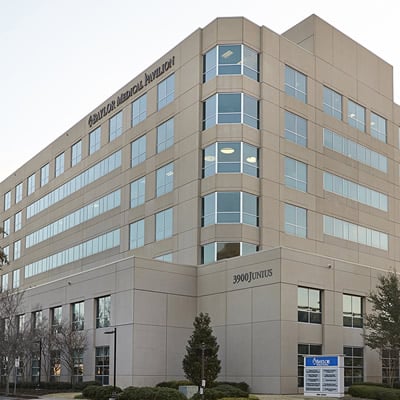
3900 Junius St , Dallas, TX, 75246
Patients in line:

9101 N Central Expy , Dallas, TX, 75231
Patients in line:

Baylor Scott & White Women's Imaging Center - Grapevine
1631 Lancaster Dr, Suite 130 , Grapevine, TX, 76051
Baylor Scott & White Women's Imaging Center - Grapevine
1631 Lancaster Dr, Suite 130 , Grapevine, TX, 76051
Patients in line:

Baylor Scott & White Women's Imaging Center - Irving
2001 N Macarthur Blvd, Mob 1, Suite 250 , Irving, TX, 75061
Baylor Scott & White Women's Imaging Center - Irving
2001 N Macarthur Blvd, Mob 1, Suite 250 , Irving, TX, 75061
Patients in line:

Baylor Scott & White Imaging Center - Rockwall
1005 W Ralph Hall Parkway, Suite 121 , Rockwall, TX, 75032
Baylor Scott & White Imaging Center - Rockwall
1005 W Ralph Hall Parkway, Suite 121 , Rockwall, TX, 75032
Patients in line:

4716 Alliance Blvd , Plano, TX, 75093
Patients in line:

440 W Lyndon B Johnson Fwy , Irving, TX, 75063
Patients in line:

Baylor Scott & White Women's Imaging Center Richardson
1410 E Renner Rd Ste 250 , Richardson, TX, 75082-2227
Baylor Scott & White Women's Imaging Center Richardson
1410 E Renner Rd Ste 250 , Richardson, TX, 75082-2227
Patients in line:

Baylor Scott & White Medical Center - Lake Pointe
6800 Scenic Dr , Rowlett, TX, 75088
Baylor Scott & White Medical Center - Lake Pointe
6800 Scenic Dr , Rowlett, TX, 75088
Patients in line:

Baylor Scott & White Imaging Center - Forney
763 E Us Hwy 80, Suite 120 , Forney, TX, 75126
Baylor Scott & White Imaging Center - Forney
763 E Us Hwy 80, Suite 120 , Forney, TX, 75126
Patients in line:
Frequently asked questions
Your breast biopsy guide: empowering information for patients